I interrupt this regular program for this possibly irrelevant reminder.
“If you always think what you always thought, you will always be what you have always been.”
“If you only think what you have always thought, you will only be what you have already become.”
There is no scarier concept than what is contained in those two variants of the same truth.
Now, I return you to the regularly scheduled programming.
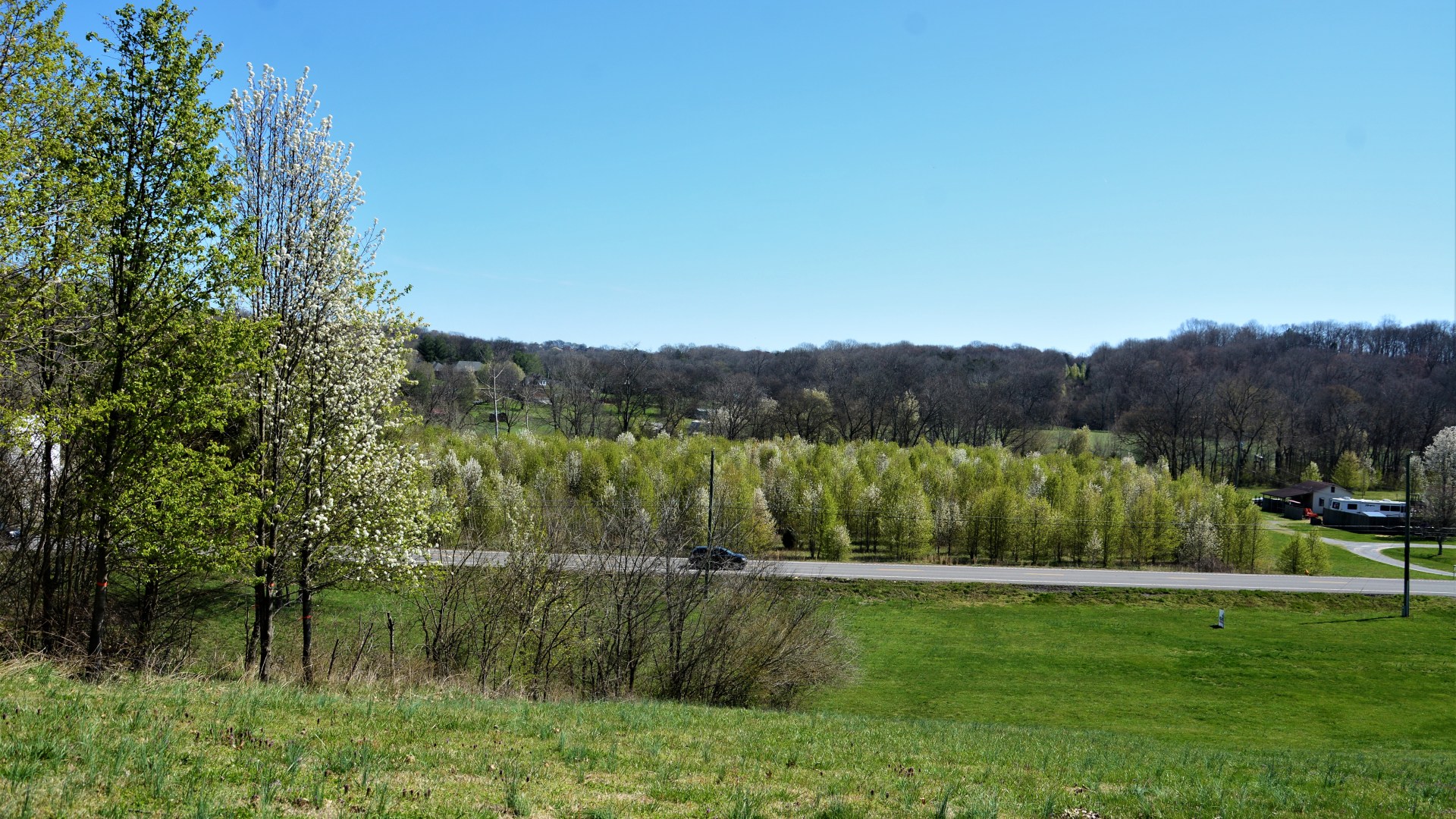
It is spring again! I know because the Bradford pear trees at our Post Office are balls of beautiful white blossoms. In a week or so, I will take a moment to sit in my truck and watch the petals of the flowers flutter down like snowflakes, which is also beautiful. As I sit there in the flurry, I anticipate the fall color of the trees, which, again, is gorgeous. Bradford pears are the first trees to green out in the summer and the last to lose their leaves in the fall. After those beautiful thoughts pass through my consciousness, I remember the reality of the Bradford Pear; they are a horticultural menace to the Tennessee landscape. Actually, they are a menace to much of the southeastern United States.
I have read that North Carolina has banned the sale of Bradford pears. In addition, they have offered a bounty for each Bradford pear destroyed by a homeowner. The reward is a seedling of a replacement tree native to the state.
Here is some interesting information about the Bradford situation. The ornamental tree was first introduced to US homeowners in 1964. It comes from China. (Could there be a COVID 19-like conspiracy to undermine our southern charm by the Chinese?) The landscaping appeals of the tree are their fast growth, round shape, spring blossoms, and fall color. The Bradford pear cannot reproduce. However, they can cross-pollinate with other oriental pear trees that do and, with the in-flight digestive help of birds, produce an abundance of hybrids that can reproduce.
The downside of the invasive hybrid is that they cannot be easily eliminated; cut them off at the ground, and they will just start growing again. The hybrids can also develop long hard spikes, far more than just a common thorn. Another demonic trait is that they grow in mass and, as a result, drive out wildlife and starve out any vegetation that grows slower them themselves.
It seems this would be a natural time to refer to Ecclesiastes three. The first verse states a profound truth in God’s economy, “There is an occasion for everything, and a time for every activity under heaven; a time to give birth and a time to die; a time to plant and a time to uproot; a time to kill and a time to heal.” (CSB)
According to a New York Times article by Rick Rohas, this is a time for Bradford pears to die, uproot, and be killed. His council is dated November 26, 2021.
There are several application points for pondering on lessons from the Bradford pear. The application confronting me in this writing poses self-examining questions. How much of God’s Truth revealed in Scripture have I planted in my life and then allowed that Truth to be cross-pollinated with my own desires and preferences? Do I have a hybrid Christianity which does not accurately reflect the Truth? Are my spiritual assertions entirely founded on God’s revelation? How have I modified the Truth to accommodate what I want to be true?
The organization of the local church, the church body near you, can also become a hybrid of Humans and God. To the degree that has happened in your church, the Kingdom’s influence is limited, and His image is distorted.
Now that we have unwittingly and effectively established the Bradford pear in our landscape, it will likely always be a nuisance. The eradication of the hybrid will be generational. So, it is with every human. Our challenge is clearly voiced by John the Baptist, “He (Jesus) must increase, but I must decrease.” (John 3:30, CSB)
Photo – A couple of acres of wild Bradford pear trees on New Hope Road we pass on the way to church.
 Baldwin Heirlooms