Jan was scurrying about getting Christmas gifts sorted and stacked and stockinged. I was helping at her direction. Then, I noticed on our bed a stack of scarves. My mind quickly returned to a shopping experience while getting gifts for my four adult girls to bring back from a mission trip to Africa in the town market of Leo, Burkina Faso.
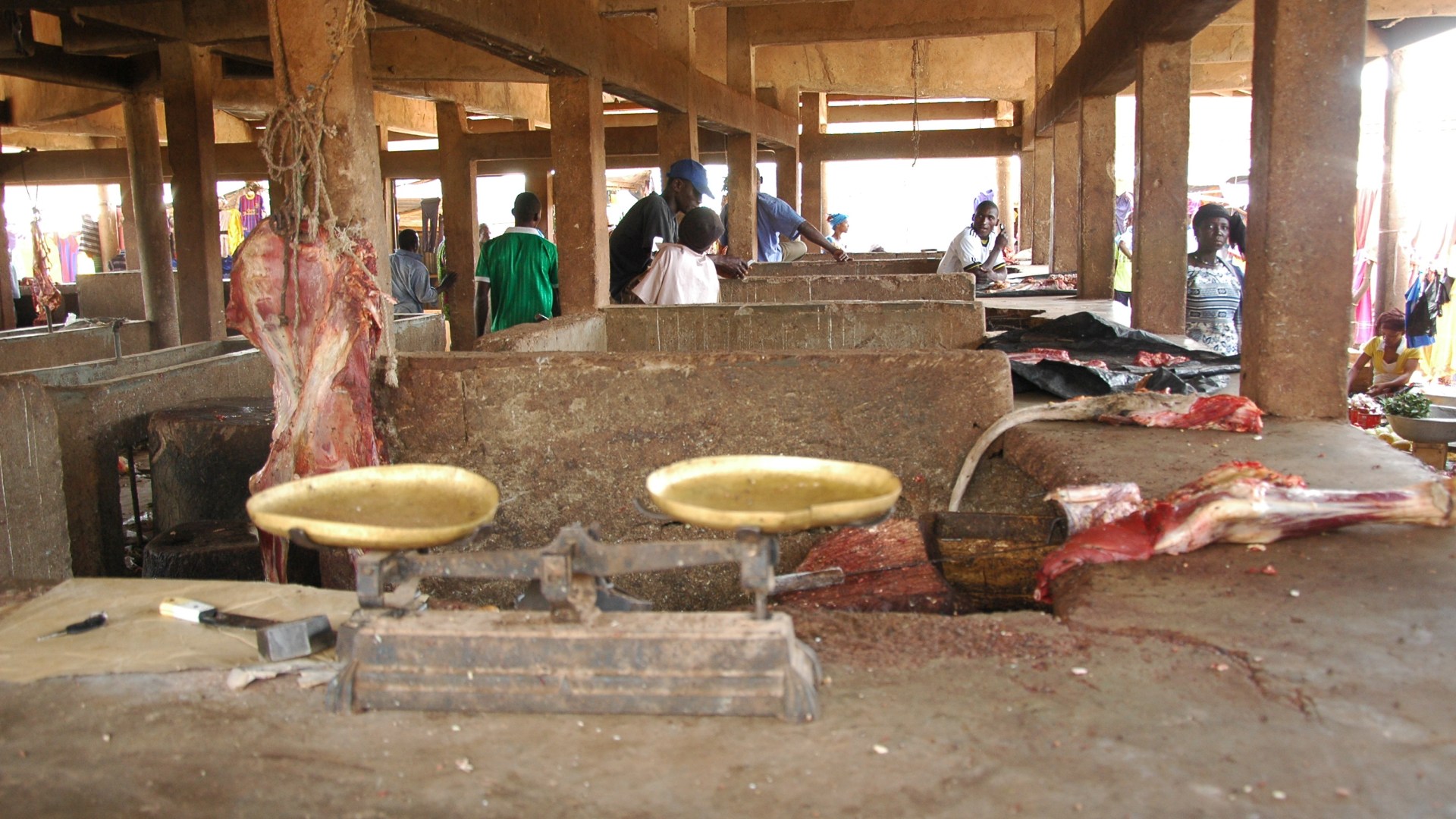
If you were to look at a map of Burkina Faso in West Africa, you would notice only one straight section of our border. That straight part is where the northern edge of Ghana meets Burkina Faso. Moving to the east on that straight line about a quarter of its length, you will come to the small city of Leo. Leo was a significant business hub for that part of Burkina Faso and Ghana. Only paved roads pass through the town, so it was dusty. A prominent mosque was in the city’s center, with open-air markets. Everything needed for life in Africa was available, from pharmaceuticals to handmade fishing arrows. Butchers sliced and diced right there in the open. As far as I could tell, there was no refrigeration other than a couple of drink machines.
What was not present were souvenirs for travelers. To satisfy my desire to bring home gifts for the family, I settle for reed-shafted arrows, a rebar hammer, a hand sickle from a repurposed file, and a few short spears.
There was also an abundance of vegetable and fruit vendors. Open containers of colorful spices lay side by side. Various sizes of aluminum cooking pots and other cookware for cooking on an open fire. Of course, what marketplace would be complete without women’s apparel? It was here that I saw a booth completely draped in colorful women’s scarves. Next to jewelry, scarves seemed to be an excellent choice to pack back to Tennessee. Most of the women in Burkina Faso wore the accessory, so I felt it was a good choice. Could there have been a better African gift than a colorfully crafted feminine gift? I didn’t think so. I enthusiastically gathered enough to give to my girls when I returned home.
They were delighted.
A year or more later, I was putting one of Jan’s scarves back where she keeps them and noticed a small tag sewn into the edge. I was surprised. Getting my glasses and squinting a lot, the small sage gave me a humiliating shock. There on the tag were the words “Made in China.”
The scarves had not changed in their soft texture or lost their vibrant color. But they indeed lost their value. Sure, it is the thought that counts. But the unthinking idea was contaminated by my unchecked assumption. In recent years women’s scarves have fallen out of popularity, and I am thankful for seeing fewer reminders of my blundering.
Many things we add to our lives are fascinating and seem harmless when we allow them into the stored information from which we form our opinions. Reading the “label” on those accepted truths is a good idea to see where they were first spawned. In our contemporary culture, the one we live in daily, many things appear appropriate and acceptable to serve as a foundation for understanding how life is best lived.
It may surprise us that much, maybe even most, of our foundational understandings of life are adapted by someone or some people in the past to accommodate what they want to be true. Those distorted truths are passed on to us as fundamental truths. If we do not check the “label,” we will not know where those trusted “truths” begin and bend them a little more to conform to our desires, and presto, we have a mess on our hands and wonder where God is and why He seems to be so inattentive to our plight.
I got this label reading advice from King David as he pleaded with God;
Search me, God, and know my heart;
test me and know my concerns.
See if there is any offensive way in me;
lead me in the everlasting way. Psalm 134:23-24 CSB
Photo – This is a picture of one of the butcher booths of the open-air market in Leo.
 Baldwin Heirlooms