In the first half of the 1970s, one of my favorite musicians was Gordan Lightfoot. He was a Canadian folk-rock artist who wrote and recorded his music, often telling a story. He has usually been referred to as Canada’s greatest songwriter. Indeed, he had several gold and multi-platinum albums. I asked my twenty-one-year-old grandson, a fantastic guitar guy if he had ever heard of Gordon Lightfoot. He had not. I was hurt and began to feel my age, for I had been set outside his musical history’s parameters. I dated myself again.
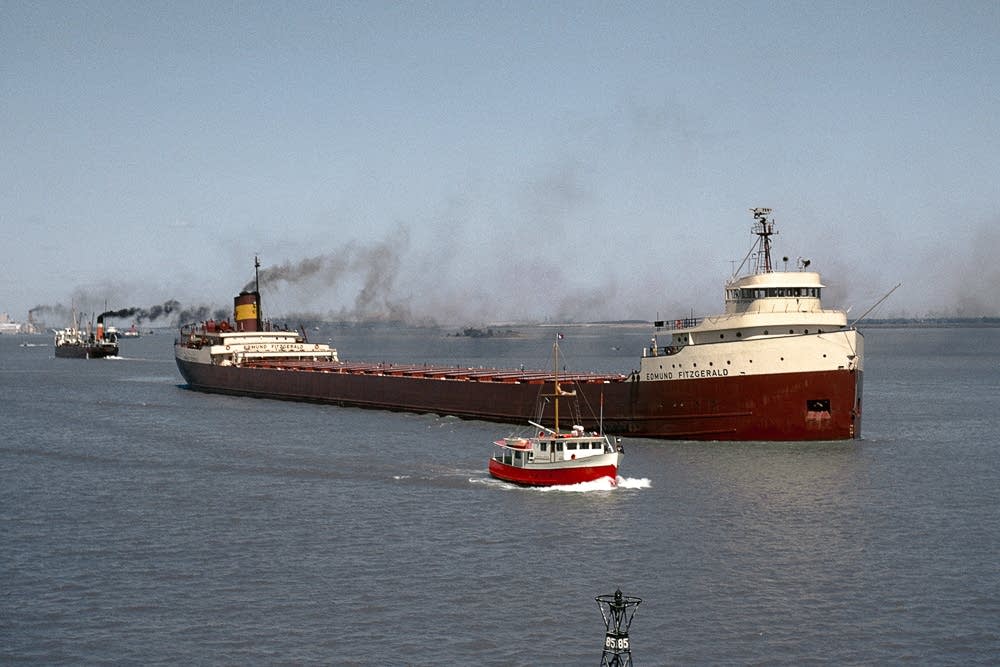
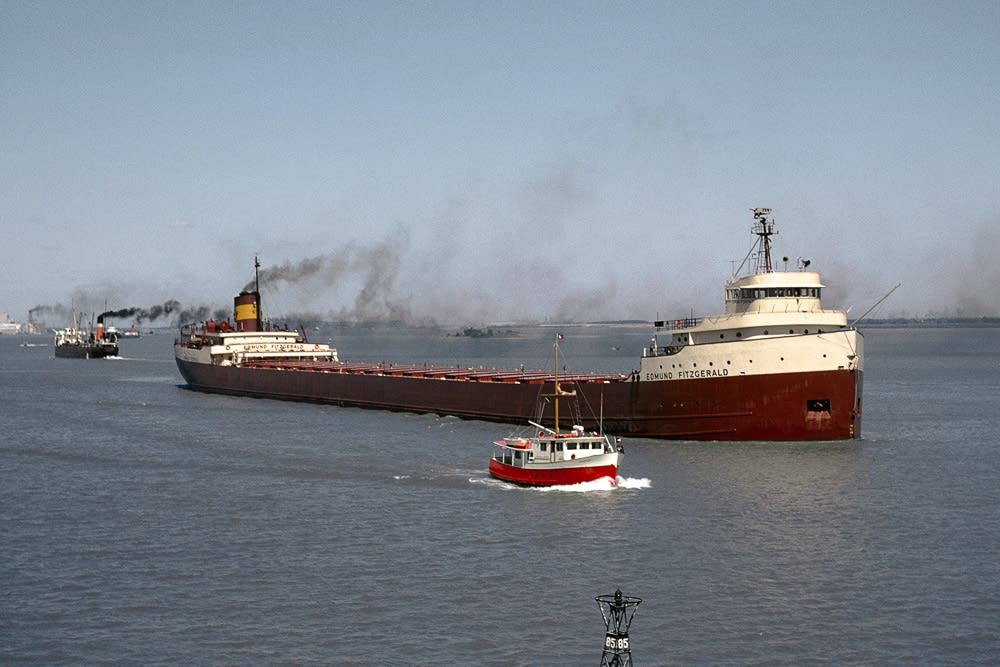
In 1976, Gordan Lightfoot wrote and recorded “The Wreck of the Edmund Fitzgerald.” The song became an international hit as it memorialized the sinking of the bulk carrier SS Edmund Fitzgerald in Lake Superior on November 10, 1975.
Lightfoot had, a sailing enthusiast himself, read the account of the ship’s sinking in the November 24, 1975 issue of Newsweek magazine titled “The Cruelest Month.” A massive late-season storm came up suddenly and overwhelmed the vessel. All twenty-nine crew members went down with the ship into the icy waters of Lake Superior.
(You can see a video of him performing his song here – https://www.bing.com/videos/riverview/relatedvideo?q=the+wreck+of+the+edmund+fitzgerald+song&mid=E62901EAD0F7E8D957F7E62901EAD0F7E8D957F7)
It is a haunting song with a heavy nautical feel. The song has fifty-seven lines. Lines 33 and 34 ask a question. I put the two lines in bold. I’ll give you a few lines of introduction.
When suppertime came, the old cook came on deck
Sayin’, “Fellas, it’s too rough to feed ya.”
At 7 p.m., a main hatchway caved in
He said, “Fellas, it’s been good to know ya”
The captain wired in, he had water comin’ in
And the good ship and crew was in peril
And later that night when his lights went out of sight
Came the wreck of the Edmund Fitzgerald
Does anyone know where the love of God goes
When the waves turn the minutes to hours?
That is an awesome question! It is necessary for peace of mind and joy in living to be realized and valued. But it does not have a mathematical answer.
Just by asking the question, we can ensure the existence of our Father God. Cows don’t ask the question when one of their close relatives is loaded up in an ugly trailer and hauled off the farm by one of the “two-leggers,” never to be seen again.
We ask the question because we were created in the “image of God.” We are like the Creator but not the same as the Creator. We have the capacity to allow other people to visualize Him in us, but we must surrender our desire to be seen as independent of Him. We often want his protection and provision but not His priorities and practices.
Human life has been treacherous since they were kicked out of the Garden of Eden’s tranquility. Yet, we have never stopped longing for that place of wholeness, security, and abundance.
The answer to Lighfoot’s question is quite simple and, at the same time, overwhelmingly profound: the love of God does not go anywhere because it is everywhere. The only place in our cosmos where God’s love is not in complete control is in the minds of humans.
The question is, “Do I believe it?”. The Bible calls this “faith.” Faith is knowing God’s person, His ways, and His promises. Then, we choose to act based on what we have come to know of Him, which is greater than what we see and feel in our current circumstances.
The Jewish king, David, wrote of his struggle with this great mystery and wrote Psalm 139. It would be good for you to spend a week slowly reading and pondering King David’s faith statement. But let me leave you with just verses seven and eight.
Where can I go from your Spirit?
Where can I flee from your presence?
If I go up to the heavens, you are there. (NIV)
Photo – The Edmund Fitzgerald
 Baldwin Heirlooms