Easter season is essential for any person who longs to live in a world characterized by love, joy, peace, patience, kindness, goodness, faithfulness, gentleness, and self-control. Who wouldn’t like to live in that neighborhood? Or have that kind of relationship within their nuclear and extended family? Who wouldn’t want to work past retirement age in such an environment?
To me, that is all on the forward side of Easter. On the preceding side of Easter, the more descriptive words are sexual immorality, impurity and debauchery; idolatry and witchcraft; hatred, discord, jealousy, fits of rage, selfish ambition, dissensions, factions and envy; drunkenness, orgies, and the like. Take Easter away, and that is your default condition of every relationship you have or hope to have. There, you will find the end of every goal, longing, dream, and anticipation—a pretty grim, even hellish, kingdom to call home.
The front side of Easter is the difficult part for me, I have a tremendous yucky dread sloshing around in my soul. The front side of Easter is the meanest, most diabolical, most objectionable attack upon the directing accuracy of my moral compass.
When I start reading one of the Gospels, I am filled with an anticipation of wonders and wisdom. But chapter by chapter, a heavy storm cloud develops behind the next page, the next chapter. Chapter after chapter, the story endears me to the Hero, Jesus. Then comes the chapter of the most heinous behavior humans can muster: crucifixion.
But to fully appreciate the last chapter, it is necessary for me to read that disturbing chapter to reach the glorious beginning of my own chapter.
“Necessary” is a pivotal word.
According to the Merriam-Webster Dictionary’s etymology, our word “necessary” came to us by way of Middle English “necessarie,” which in turn comes from the Latin “necessarius,” derived from “necesse.” I don’t pretend to know what any of that means, but here’s their conclusion: the word “probably from ne- not + cedere to withdraw” I like that. That challenges me! Jesus did “not withdraw” from his cross, nor should I entertain the option of withdrawing from the difficult circumstances the Kingdom’s coming presents in my life.
We should not be astonished by Jesus’ insistence that it is “necessary” for us to voluntarily “take up” our cross and follow Him. If we don’t, we are not following; we are just shouting with the watching crowd, “Hosanna.”
“… It is necessary that the Son of Man suffer many things and be rejected by the elders, chief priests, and scribes, be killed, and be raised the third day.” Luke 9:22 (CSV)
“In fact, making an agreement of this kind is like writing a will. This is because the one who makes the will must die before it is of any use.” Hebrews 9:16 (CEV)
So, I dive into that beautiful yet ugly chapter, which both grosses me out and angers me, yet humbles me. I read it all. It is a bitter collection of words and ideas to ponder. But as I, or you, meditate on the words and anticipate the final chapter, both Jesus’ and ours, the bitterness will be transformed into sweetness.
My future, and yours, will be built on the whole of the Gospel. Without that disturbing chapter, I hate to read, there is no “Good News”. All that is left is the “same-o-news.” That news was first announced back in Genesis: “… you will surely die.” That should disturb us all.
If I do not accept the fact that my life is a dead life, I will never be able to receive the gift of a resurrection life that Jesus offers me. It is impossible to hold the two in your hand; you cannot hold onto your life and at the same time receive His resurrection Life. They are incompatible. They are diametrically opposed.
Here is the hope to endure the released calamities Pandora, but relocked before that last item, hope, could escape her box.
What, then, are we to say about these things? If God is for us, who is against us? He did not even spare his own Sona but gave him up for us all. How will he not also with him grant us everything? Romans 8:31-32 (CSB)
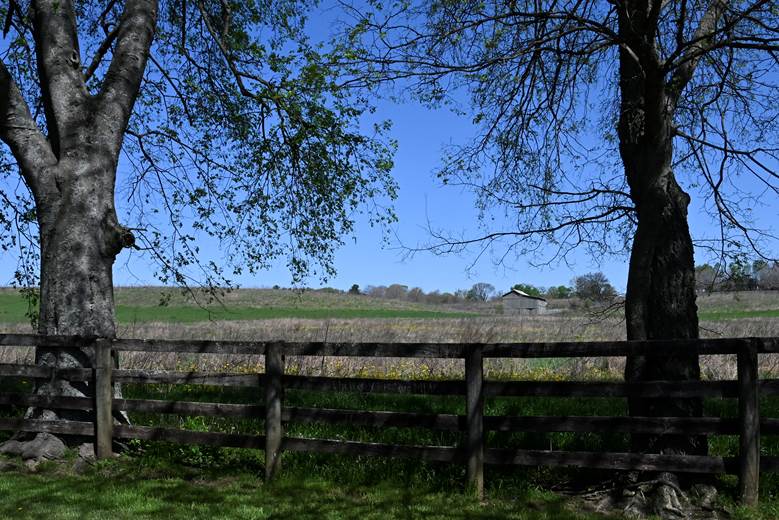
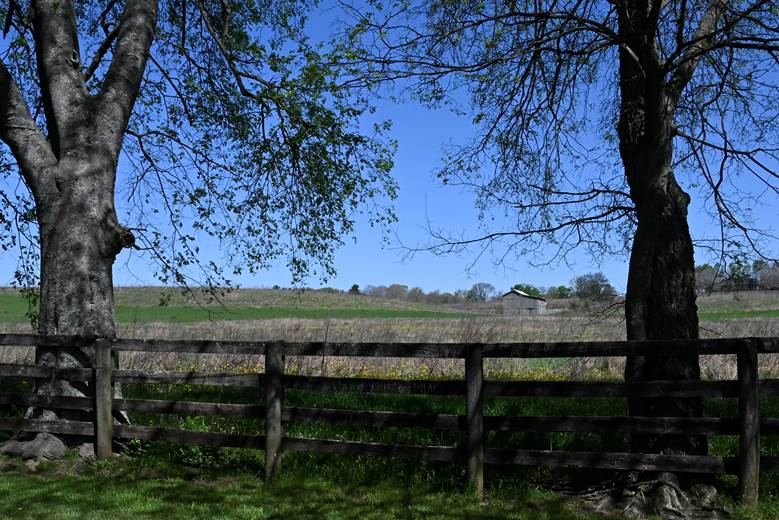
Photo – Springtime in Robertson County, Tennessee.
 Baldwin Heirlooms