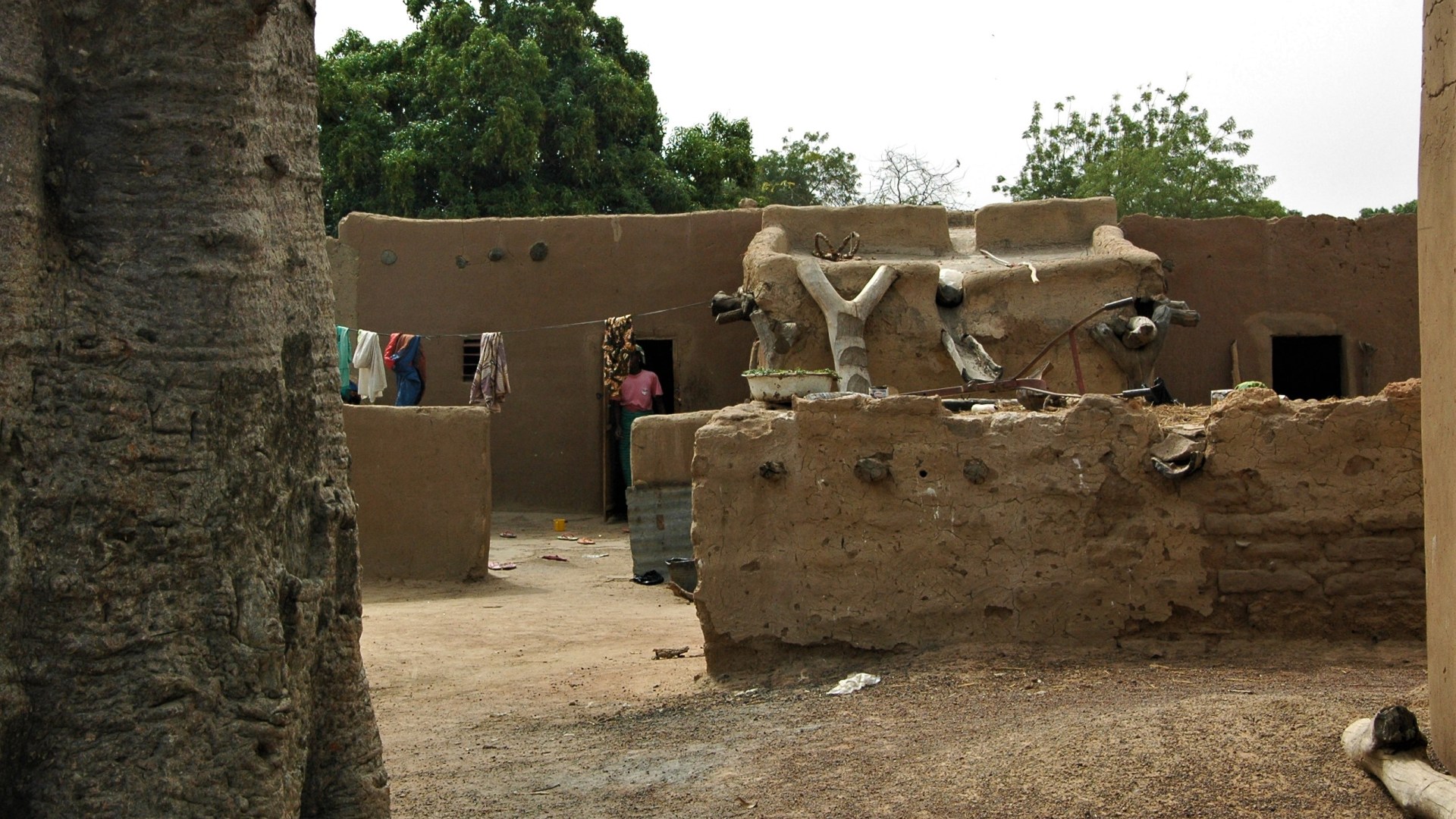
Over six years, I spent a total of three months in the south-west part of the nation of Burkina Faso in West Africa. We would fly into the capital, Ouagadougou, spend the night then be driven south to the little city of Leo (pronounced “Lay-O”), where our missionary connection lived. From there, we would be driven out a dirt road to the small town of To. Our pronunciation of the word To sounds like “toe” as in “big toe.”
Utilities were non-existent except for a few of the tiny one-room businesses where a single light fixture pushed a portion of the night away. Cell phones were there, but to charge them, you dropped it off at a store and returned when it was ready. Some homes had a light, but it was powered by a twelve-volt car battery which was recharged by a small solar panel. There was no indoor plumbing or even outdoor plumbing. The bathroom was an arm-length tool for digging and a kettle of water for sanitation. With these two items, one took their constitutional walk to the “bush” All cooking was done in a pot on an open fire.
The houses were made of what we would call adobe, sundried mud bricks. The typical house had one large room and usually two smaller ones. Often there was a door opening but no door, just a piece of cloth which was pulled back to allow light in. Each room had a small high window. In the home where we were guests, a shoulder-high wall extended from the front of the house, creating a storage area and a corral for any livestock they owned. This wall also formed a portion of the neighbor’s house. That’s where we put our sleeping cots; in the open, not in the house. (In case you are wondering, only the chickens were allowed to stay in our “corral.”)
I tell you all this to give a contrast to how they treated us. One of the chief’s son moved out of his house to allow us a place to stay for the days we were in the village. They made room for us. Hospitality was a big deal to them. That is the way they lived, it was who they were. It was a Muslim community, but I never, ever feared. These delightful people fed us, made room for us, protected, and entertained us.
They did not care for us because we were white or comparably affluent or from the United States. We were their guests; we were travelers in need of a place to be protected and provisions for living.
When Christmas comes around, and we start thinking about Bethlehem, I envision To. That little West Africa village is closer in the resemblance of the ancient time when Jesus was born than any picture I have ever seen. There was no room for us, but they made room.
I think of this when I reflect on Luke’s account of Jesus’ birth when he says, “…there was no guest room available for them.” It could be closer to the truth that because Mary was pregnant before marriage to Joseph, Bethlehem chose to make no room. These were Joseph’s people, his extended family!
You and I may not experience it, but many people in the world experience rejection by family and friends because they choose to live a life of hungering for God through faith in Jesus who is the Christ. I have met people in other countries whose parents had their funeral after they chose to follow Christ.
You may not have experienced rejection of family because of choosing to be a follower of Jesus, but likely you have had your new view of life marginalized by people you respect. They had no room for your Christ-like world view.
To you who are enduring such rejection, I remind you; the “Merry” in “Merry Christmas” is the result of faith in the “Newborn King.” It’s more than “believing” Jesus was born, it’s experiencing the new divine love connection this King has given you. Rejoice, you have been reconnected to the God who lovingly created you. “Merry” is not an emotion; it’s the joy of being where you belong, in Christ, in God, in His loving care and sure plan.
I do not wish you a Merry Christmas. I remind you, you have already been given a Merry Christmas. Just go out and gather it up.
Photo – A dwelling in To, Burkina Faso.
 Baldwin Heirlooms
Thanks for this Fred!
LikeLike