
There is no such thing as a saw that is not a power saw. The power may come from an electrical outlet or a battery. Or it may come from the breakfast I had this morning. Either way, something must make the saw move; it’s just a piece of metal if it’s not moving. There are only two types of motion for wood-cutting saws: reciprocating and continuous. A continuous-cutting saw is a saw with a round blade, such as a table saw or a circular saw. Having said that, I also use a chainsaw and a bandsaw, both of which have closed-loop blades.
I only have two of the second type, a saber saw and a reciprocating saw. Well, they are both reciprocating; the saber saw blades go up and down, while the other goes back and forth. I seldom use either. They both make a lot of noise, and I have difficulty controlling them with accuracy.
The reciprocating saws only cut when the blade is being pulled back into the saw. Outgoing strokes do not cut. But it is a necessary movement if you want to cut the wood.
I am not at all sure I have clearly said what I know. But the whole picture came to mind as I pondered my pastor’s sermon from the Lord’s Prayer a couple of weeks ago. We spent the month of January considering the Lord’s prayer. On this Sunday, he was expounding excellently on that part of the prayer I have the most trouble meaning when I pray it: “Forgive us our debts as we forgive our debtors.”
It’s the second part that causes me to repeat the first part the most. Surely, it would have been better, at least for me, if Jesus had just put a period after “debts.” Not only did Jesus NOT put a period there, but the verse after his prayer concludes with, “If you don’t forgive others, your Father also will not forgive you.” YIKES! (That’s my own fallible paraphrase, not a quote. If that offends you, please forgive me. See, I’m working on it.)
Forgiveness is reciprocating act. There is a going out and a coming back in. It is so easy to say, “Lord, forgive me of my mini sins.” Yes, I did use the appropriate word! My sins are far more forgivable than the ones others impose on me.
Most of us, most of the time, find it more comfortable to give the pre-adolescent expression of “Sorry.” And that miserly expression of regret which [often] sails from our lips into the ears of the hearing on the wings of defiant sarcasm.
We want God to be generous with His compassion, mercy, and grace in forgiving us, even as we skimp on our giving to others. Being forgiven is the saw blade going out, cleaning out the cut we just made in the wood. As important as that is, it is the pulling back in, the cutting stroke, that is the most important.
The only proof you will have that God has forgiven you is that you, in turn, find it compelling to reciprocate the forgiveness to every person He forgives. It is as if God is saying, “If you are willing to forgive them, then you are being made and remade in my image. Extending forgiveness should come naturally to you.” (Aactually, super-naturally.)
Allow me to say it another way, in the words of Jesus: “Take up your cross and follow me.” Is that clear enough?
That doesn’t mean it is easy or comfortable, but it is exactly what you can expect the Holy Spirit to insist on if you are serious about following Jesus. You may not be thinking about forgiving the person who wronged you, but the Spirit who has given you “new life” certainly is. The reciprocating cutting movement of the blade is what hurts us the most and changes us.
Being forgiven by God is a wonderful thing, but if the forgiveness received does not reshape our character, then His forgiveness has not fully completed its purpose. Getting forgiveness is cleaning out the kerf. Giving forgiveness is the cutting stroke to our character. When God gives us something hard to do, that is our God-given opportunity to allow Him to do what He does best: INSERT HIS KINGDOM ON EARTH. And from the time you started following Jesus, that is what God “wills” every moment of every day. He is reshaping your character to be ready for the challenge of our coming resurrection life. Asking God’s will to be done “on earth as it is in heaven” is more about me adjusting my thinking than about the human environment around me.
God does not forgive to make us more moral. He forgives us so that His character can be displayed through us. That demonstration will cause some to hate us and others to seek Him. For a Biblical foundation, consider Jesus washing his disciples’ feet in John 13:1-17.
“So follow my footsteps and do for each other what I have done for you.” (John 13:15, First Nation Version)
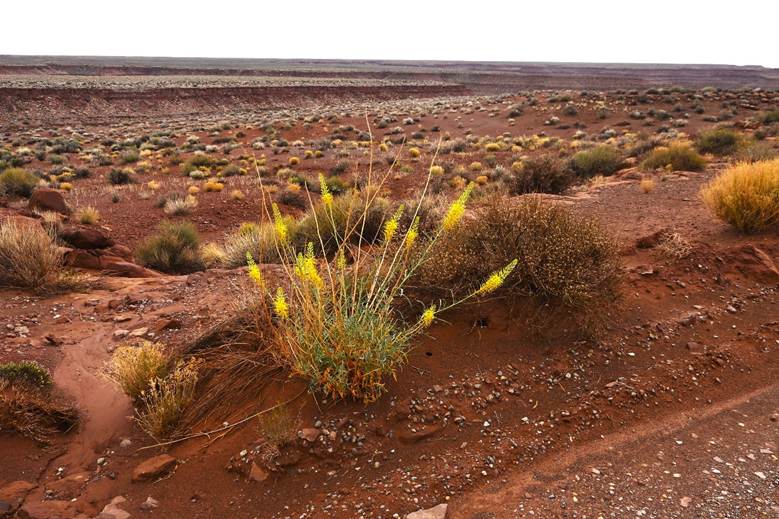
Photo – Valley of the Gods, Utah

