
Over the last three days, I have, with growing frustration, been trying to start this pondering post. Hopefully, this is the solution. It has been like trying to cross a busy street. Every time I set foot out, another car comes flying past.
Wisdom is my self-assigned topic for consideration. My thoughts spurt in and out of existence like shooting stars in the night sky. And I wonder why this is so. Could it be because I don’t have any idea of what I am trying to write about?
One of my obstacles could be that when I try to think of wise people, I have a hard time naming any. Oh, I think of Solomon, Aesop, Merlin, Yoda, Poor Richard, and Yogi Berra, but after that, I start staggering.
It’s not that I do not know people who have given me wise counsel. My closest friends are each smart, witty, and talented in one, two, or three areas, but I do not see them as having an overall wise word for every crisis I face. They have areas of expertise, but none of us would be considered “wise.” As a collection, they have a great breadth of wisdom, each bringing a piece of the whole wise pie. There are even moments when I contribute to the pie’s fruitiness.
I took a look at three videos on wisdom. The first was two hours long. The second was 25 minutes long. The third was just over eleven minutes long. The two-hour guy, sitting front and center in the video, told us he had spent the last three days meditating on wisdom in preparation. The second guy had hard-to-read graphics and spoke off camera. The eleven-minute guy had just returned from three weeks of children’s church camps and spoke from a seated position on the floor, leaning back on his sofa.
I also consulted five different English and theological dictionaries and read an article from Psychology Today. I realize this is far from exhaustive research, but I have come to a couple of conclusions which have satisfied my curiosity for now.
The first conclusion is that in the academic world at large, scholars use many words but say very little, and even less that satisfies my quest. In the world of the theological scholars, I get mostly a rephrasing of what I have been taught all of my life, but kinda dumbed down for children.
My second conclusion is that I might as well throw my thoughts into the communal blender as well. I realize that I might be a bit wrong, but no one else has hit the bullseye either. I’m in good, maybe not great, company.
My third conclusion is that wisdom has a beginning place. Where you begin your quest for wisdom will determine whether what you end up with is pseudo-wisdom or true wisdom. It could be called “facsimile wisdom.” Whatever it’s called, this wisdom begins its search for understanding in the “in-house” cognitive musings of the individual seeker.
Fourth, and finally, I think that wisdom is the pursuit, gathering, processing, and application of all the laws of the universe.
When humankind learned the laws of sewage removal, life became sweeter for everyone who obeyed them – and their neighbors. The same is true for every kind of human interaction: follow God’s universal laws and realize “Promised Land” life.
“Skilled living gets its start in the Fear-of-God, insight into life from knowing the Holy God.” (Proverbs 9:10, The Message)
(Of course, as we do so, we will have to contend with those who do not start with the “Fear-of-God.)
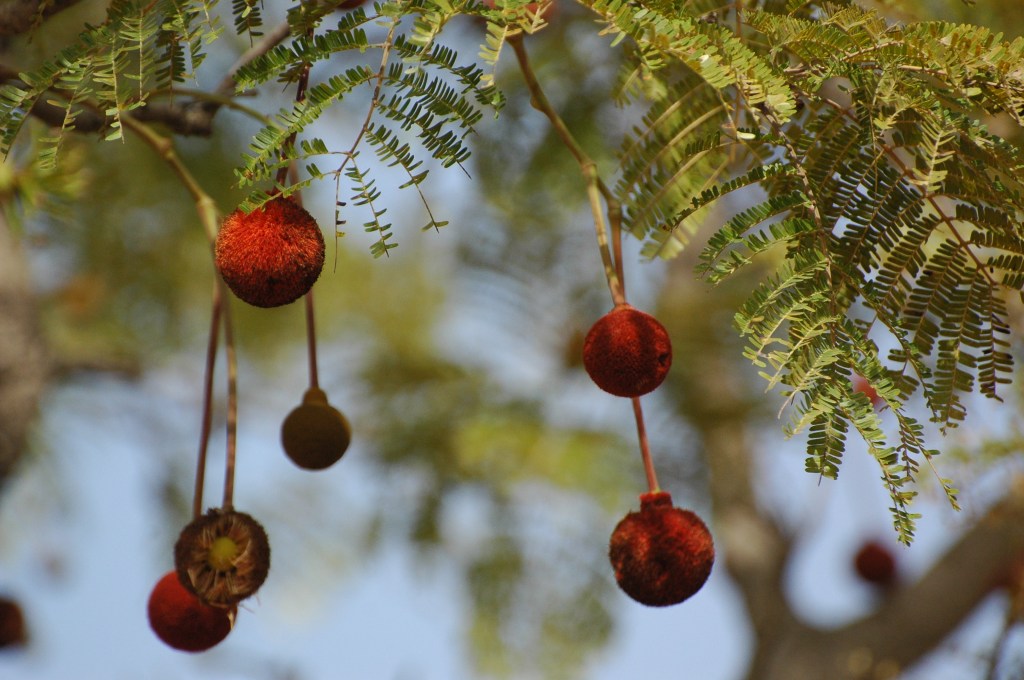
Photo – Seed pods on a tree I saw in Burkina Faso, West Africa. I could not find the name of the tree, if you know please tell me.

