
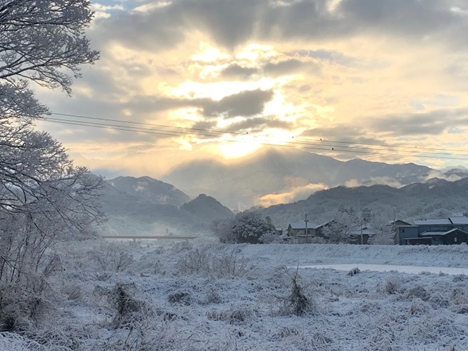
Photo – copied from – https://wordnest.substack.com/p/the-hidden-legends-of-mt-tsurugi
In the 1960s, the Japanese compiled a list of Japan’s top 100 sights to see. Tsurugi-san, standing in the eastern part of Iya Valley, is one sight. I have been to Japan, but just three days in Tokyo. A friend and I caught a troop transport flight that stopped in Anchorage, Alaska. They were on their way to Vietnam. I don’t remember the irony of our seats among those guys heading to a live-fire zone. Every time this trip comes to mind now, my heart hurts.
While I saw Mount Fuji in the distance, I was not there for sightseeing. I was there to buy camera equipment. But I did see a culture that marveled me. That was my first trip out of the good ole USA.
Recently, while on an Australian “walkabout” online, I was drawn to the picture of Mount Tsurugi, then to the story that accompanied it. In that story, I read a word that I was fascinated by, which was introduced to me back in high school biology class, or chemistry: “osmosis.”
Here is the passage that I read:
“Mount Tsurugi’s site is considered the place of origin of Shugendo, an ancient spiritual practice prominent in Japan. This religious movement, derived from Shinto, is said to have appeared during the Heian period, in the 7th century. It aims to the comprehension and the spiritual development via study and the search for osmosis between humankind and nature.”
“…the search for osmosis between humankind and nature.” The only time I can remember experiencing osmosis between nature and me is when I stood up after resting on a log or rock. If the natural resting place was wet, the osmosis evidence took longer to dissipate.
I’ll get back to the word in a moment. I thought you might enjoy reading about some of the folklore connected to Mount Tsurugi.
Standing 2,999 meters tall, Mt. Tsurugi is one of the toughest mountains to climb in Japan’s Northern Alps (Hida Mountains). Its steep cliffs and rough trails have made it a sacred and nearly unreachable place, respected by monks and mountain worshippers for centuries.
In 1907, an expedition led by Yoshitaro Shibazaki from the Army Land Survey Department recorded the first official climb. However, old iron swords and metal staffs found near the top suggest that religious monks may have reached the summit long before that.
Saeki Ariyori and the Sacred Summit
During the Heian period, a warrior named Saeki Ariyori was told by the famous monk Kukai (Kobo Daishi) that a divine spirit lived on Mt. Tsurugi. Wanting to see it for himself, Ariyori made the dangerous climb to the top. When he finally reached the peak, he felt the mountain’s sacred power. Later, he built a religious site at the base of the mountain, helping spread faith in the Tateyama region.
The Great Serpent and the Guardian Deity
A local legend tells of a huge serpent that once lived in the river at the foot of Mt. Tsurugi, scaring the villagers. Afraid, they prayed to the mountain for help. One day, a god came down from the sky, holding a sword, and defeated the serpent. It is said that the god thrust the sword into the mountain’s peak, giving it the name “Tsurugi,” which means “sword” in Japanese.
The Tengu and the Storms
Long ago, people believed that a tengu (a mythical mountain spirit) lived deep in the mountains of Kamiichi. Sometimes, it would cause strong winds on Mt. Tsurugi to test climbers’ strength and courage. But as more people prayed, the tengu stopped its mischief and became a protector of the mountain.
It is my conviction that experiencing the “Fruit of the Spirit” is like the wandering Israelites gathering their daily portion of manna. The Fruit is provided to us by the nature of the Holy Spirit, the Trinity, not for the ease of our journey in our wilderness, but for the announcement to the watching civilizations that THE God is our God and that He is good! We are beneficiaries by participating in our Creator’s purposes.
Here’s the point: just as the Israelites had to get out of their tents and take a bucket to gather their gifts of manna from God, so we too must get out of our self-sufficiency to gain the Fruits intended to nurture the world as they nurture us.
The Fruit of the Spirit is not experienced by osmosis. The message of God is not transmitted by a lazy, nonchalant reading of Scripture, hanging out with Christians, and/or sinning less.
We must get out of our comfortable and private tents with the bucket of our open minds and gather what the Spirit of God has laid before us for the taking! No follower of Jesus Christ can sit at the foot of a mountain and expect to benefit from our Lord by osmosis.
We cannot enjoy or demonstrate the wonders of the Fruit of the Spirit by osmosis.
“But the fruit of the Spirit is love, joy, peace, forbearance, kindness, goodness, faithfulness, gentleness and self-control. Against such things there is no law.” Galatians 5:22-23 New International Version
Also see more at – https://www.kanpai-japan.com/shikoku/mount-tsurugi

